Beta-Alanine Tingling: Why Some Capsules Make Skin Prickle
That pins-and-needles feeling after some energy capsules has a known cause. Here is what the research and Germany's 2026 risk assessment actually say about it.
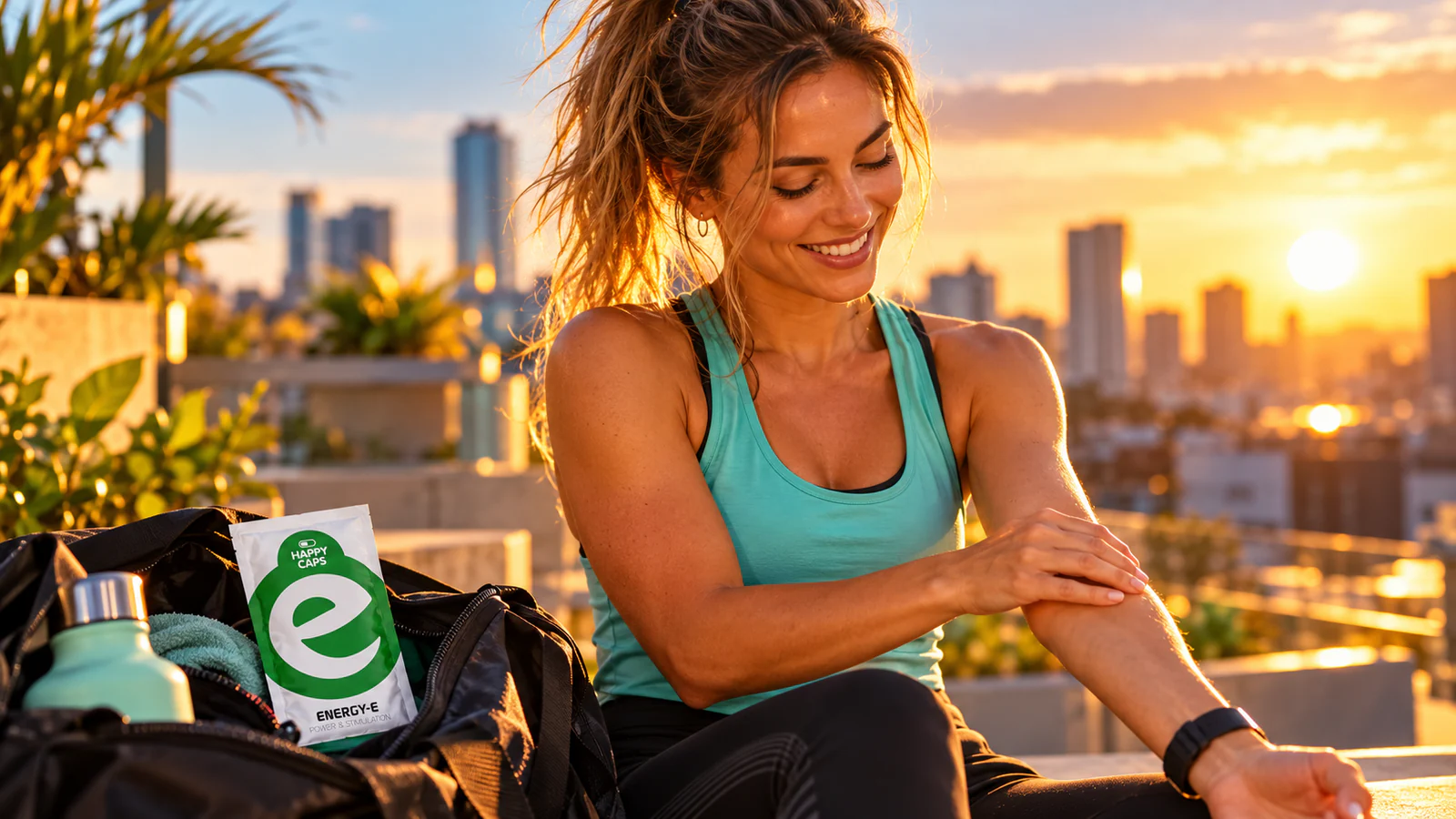
A wave of pins and needles across your face, neck or hands, fifteen or twenty minutes after a capsule, can be a surprise the first time it happens. If the label lists beta-alanine, you’ve probably found the reason. Beta-alanine tingling is one of the best-known quirks in sports nutrition: a nerve sensation, not a skin reaction, that usually fades within 60 to 90 minutes.
At Happy Caps we’re a Dutch brand that’s been around since 1997, and our capsules are organised by mood rather than by single ingredients. So we like knowing what every ingredient on a label actually does. Beta-alanine is one of them, best known in our Energy-E blend, so here’s the friendly version: what the tingle is, what it isn’t, and what Germany’s risk assessors said about it in 2026.
Why beta-alanine makes you tingle
Beta-alanine is an amino acid your body makes on its own and also gets from meat and fish. Its best-known job is helping muscles make carnosine, which is how it ended up in so many pre-workout formulas.
The tingle comes from a receptor called MrgprD, found on sensory nerve endings in the outer layer of the skin. When beta-alanine levels in the blood climb quickly, those nerves switch on and your brain reads the signal as tingling, prickling or a light itch. Once levels drop, the feeling goes. A 2012 study published in the Journal of Neuroscience confirmed the mechanism and found none of the raised red patch that histamine causes. In other words, the beta-alanine itch runs on a different pathway from an allergic one.
What beta-alanine paresthesia feels like and how long it lasts
Paresthesia is simply the scientific word for an unusual, painless skin sensation. The beta-alanine version is fairly predictable:
When it starts: usually 10 to 20 minutes after a fast-release product.
Where you feel it: most often the face, neck, backs of the hands and upper body.
How long it lasts: typically 60 to 90 minutes.
What can come with it: warmth, itching or brief reddening for some people, and mild numbness for a few.
How strongly you feel it depends mostly on how fast beta-alanine reaches the blood. Larger single amounts of fast-release forms produce the clearest sensations, while slow-release formulations soften the peak: in one trial, slow-release tablets caused sensations no different from a placebo. Body weight and personal sensitivity play a part too, and some people feel nothing at all.
One myth is worth clearing up. A strong tingle is not a sign that a product is “working”. It shows how quickly an ingredient was absorbed, not how good the product is.
Where beta-alanine fits in the Happy Caps range
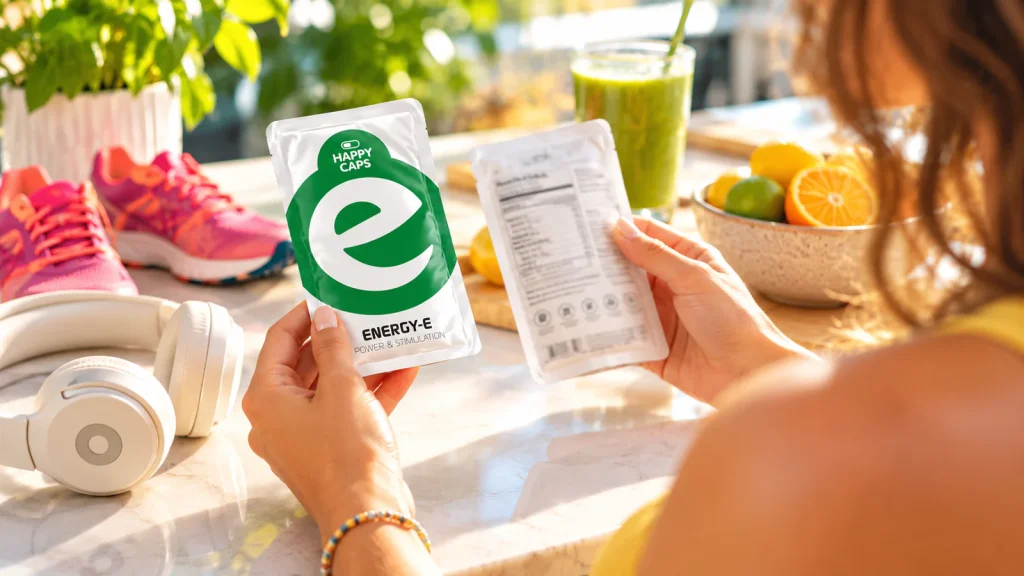
In our range, beta-alanine is part of Energy-E, the blend we created for active days, long nights and everything in between. Its product page highlights rhodiola rosea and guarana; the ingredient list specifies guarana extract (30% caffeine) and also names beta-alanine, L-arginine, griffonia simplicifolia, black pepper extract, a vitamin complex and an amino acid complex. If you like knowing exactly what goes into a capsule before you choose, our guide to what’s inside a Happy Caps blend walks through how our formulas are put together.
The Energy-E batch compliance statement confirms beta-alanine on the ingredient list but doesn’t yet give amounts per capsule, so we won’t guess how a capsule compares with the reference figures further down. The product page is clear about who Energy-E is for: healthy adults aged 18 and over, not during pregnancy or breastfeeding, not for people with heart conditions or serious medical concerns, and anyone on medication should check with a doctor first. Because guarana brings caffeine, our guide to theobromine vs caffeine is a useful companion read.
Not every lively-sounding formula follows the same recipe. Brain-E, our capsule for days full of ideas, learning and deep digital flow, is built around rhodiola rosea, choline and L-theanine, and doesn’t list beta-alanine. It does list caffeine, so it isn’t a stimulant-free option, just a different blend for a different kind of day. Putting the two ingredient lists side by side is the easiest way to find your match.
Beta-alanine tingling vs niacin flush
The sensation most often confused with beta-alanine is the niacin flush. Niacin is vitamin B3, and one form of it, nicotinic acid, widens the small blood vessels in the skin. The NIH factsheet on niacin describes the result: red skin on the face, arms and chest, usually with burning, tingling or itching.
Factor
Beta-alanine tingle
Niacin flush
Main sensation
Tingling, prickling, mild itch
Warmth and burning, often with tingling or itch
Visible redness
Usually none; some report brief reddening
Yes, typically face, arms and chest
What causes it
MrgprD receptors on skin nerves
Widening of small blood vessels in the skin
Typical onset
Around 10–20 minutes (fast-release forms)
Within about 30 minutes
Typical duration
Around 60–90 minutes
Transient
On a label
Beta-alanine, β-alanine
Niacin, nicotinic acid, vitamin B3
The quickest check is the mirror. Clearly red skin points to niacin; skin that looks normal but feels as if something is crawling over it points to beta-alanine. Not every form of niacin flushes, either: nicotinamide doesn’t. That’s why the exact wording matters. Brain-E, for example, lists nicotinamide, Energy-E lists a vitamin complex without naming the form, and some of our other blends say “Vitamin B3 (Flush)” outright.
What Germany’s BfR concluded about beta-alanine in 2026
Across the research, paresthesia is the side effect that keeps coming up. A 2019 meta-analysis of 101 human studies found it was the only side effect reported, with odds almost nine times higher than with a placebo.
Germany’s Federal Institute for Risk Assessment took a fresh look in its opinion 046/2026 of 19 August 2026. It describes the tingle as reversible and not linked to any detectable nerve damage, but it’s cautious about the evidence: most studies were built to test sports performance rather than safety, nearly all involved young, healthy, mostly male adults, and none ran longer than 24 weeks. Its key points:
No safe intake level can be set. The human data aren’t strong enough to define a health-based guidance value for beta-alanine in supplements.
The tingle is unlikely at low amounts. The risk of paresthesia in healthy adults is very low with single amounts below 400 mg, including several such amounts spread over the day if the total stays below 1.2 g.
Time-limited use. It recommends using beta-alanine supplements for less than 12 weeks at a time.
Clear exclusions on labels. Children and teenagers, pregnant and breastfeeding women and people aged 65 and over should be ruled out, because there is almost no research on these groups.
These are an authority’s reference points, not intake advice: always follow the directions on the pack.
When a tingle is something else
The tingle described in studies is short-lived, painless and settles by itself. Allergic reactions are a different story. The European Medicines Agency considers anaphylaxis after beta-alanine plausible, based on reports involving medicines that contain it, with an unknown frequency, and the BfR suggests supplement labels carry a similar warning.
Stop and get urgent medical help for swelling of the lips, face or throat, difficulty breathing, wheezing, spreading hives or feeling faint. See a doctor or pharmacist if numbness or weakness lingers, if the feeling lasts well beyond a couple of hours, affects one side of the body only or comes with chest pain or a racing heart.
Choosing your blend with the label in hand
Beta-alanine tingling has a refreshingly simple explanation: a quick rise in blood levels wakes up a group of skin nerves for an hour or so. It varies from person to person and says nothing about how well a product works. Before you pick a blend, three questions cover most of it:
Is beta-alanine listed, and is there an amount per capsule?
Which form of niacin, if any: nicotinic acid or nicotinamide?
What else is in the mix, especially caffeine or guarana?
That’s why every Happy Caps capsule shows its full ingredient list on its product page. Explore the full capsules range to compare formulas by mood, or let our guide on how to choose a Happy Caps blend point you in the right direction. Still curious? The Happy Caps FAQ has the practical answers.
Common questions about the beta-alanine tingle
Is the beta-alanine itch an allergic reaction?
Usually not. The typical itch comes from skin nerves and doesn’t involve histamine, the substance behind most allergic itching. Allergic reactions to beta-alanine have been reported, though, and look different: swelling, hives or breathing difficulties need urgent medical attention.
Does the tingle fade if you keep taking beta-alanine?
Not according to the evidence so far. In a four-week study reviewed by the BfR, people on a fast-release form reported paresthesia on almost every day they took it, while those on a sustained-release form reported it on only a few days.
Why does one product make me tingle and another doesn’t?
The amount per serving, how quickly the formulation releases beta-alanine and what else is in the blend all play a part. If a label gives neither the amount nor the release type, there’s little to compare.
Can food containing beta-alanine cause the same feeling?
Food releases it more gradually. In one study, chicken broth providing a similar amount raised blood levels more slowly, and to a lower peak, than the same amount taken as a pure powder.
Does every energy capsule contain beta-alanine?
No. It’s common in pre-workout-style formulas, but plenty of blends leave it out. In the Happy Caps range, Energy-E lists beta-alanine while Brain-E, built around ingredients such as L-theanine, choline and rhodiola, does not. The ingredient list on each product page is the quickest way to check.


 100% ingredient compliant


 English
 Nederlands
 Deutsch
 Français
 Español
 Italiano